










A Noticeable Change
Modern-day advances are helping with weight loss, but experts urge a cautious approach
For many throughout the nation losing weight is a goal they hope to achieve, not only for aesthetic reasons but also for their health. However, this goal often comes with challenges due to any number of biological and lifestyle factors.
With these struggles and the influx of information around dieting, different medications, surgeries and weight-loss strategies available today, it can be difficult for those on their own weight-loss journeys to know where to begin.
To help clear up some of what to look for and how to best approach your weight-loss journey, we talked with several experts in the medical field.
What are the preferred methods available to those looking to lose weight?
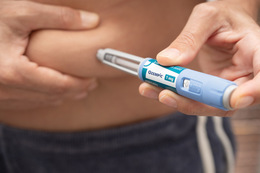
“Obviously there’s been a lot of talk about the GLPs in the recent years. We kind of try to frame the GLPs as a tool, not a shortcut, not a quick fix, but a tool that help to improve overall metabolic health. That being said, speaking about obesity and weight loss, we like to reframe obesity as a chronic disease. It’s influenced by many things: genetics, hormones, environment. So we like to use GLPs as a tool to combat that in conjunction with lifestyle changes, nutrition, weight management and metabolic health.”
-Aubrey Boegley, APN, internal medicine nurse practitioner, Advocare South Jersey Internal Medicine
“I would categorize them as medications, surgery, nutritional counseling and behavioral counseling. That’s what we usually offer in our program. … The most popular medications now are GLP medications. They tend to be more effective than older medications and this is by far the most common intervention used in modern treatment. We still do perform surgeries for weight loss, and the criteria for the two are different. The body mass index is the criteria that we set for patients for either one of these interventions, and the criteria for BMI are different. Mostly it’s BMI greater than 30 for medications, or greater than 40 for surgery. Nutritional counseling and behavioral health counseling are offered to all patients that come into our program, so they’re helpful for everyone.”
-Dr. Louis Balsama, bariatric surgeon, Virtua Health
What are some of the drawbacks to things like GLPs or weight-loss surgery?
“Excess skin is very common after significant weight loss. While non-surgical treatments offer mild tightening, surgical procedures like tummy tucks, arm lifts and breast lifts provide the most meaningful results. They can be complemented by volume enhancements, such as fillers and fat grafting. The goal is to reshape the body and reflect the patient’s hard work.”
-Dr. Julia Spears, Metropolitan Plastic Surgery
“The drawbacks in general for medications are costs and accessibility. Some patients don’t have access through their health insurance plan to some of these medications, and they can be quite expensive. So that’s one of the major drawbacks for the medication arm of treatment. As for the surgical arm, it’s a long work up for the surgery. … Overall, it seems that the results are a little better long term. But these results are still being studied, compared to the newer medications. The other thing with medications is they typically have to be continued to see [prolonged] weight loss. If they’re discontinued, patients usually will gain weight back, whereas the surgery is meant to be more of a lifelong change. … In some cases, we do have bariatric patients that are on these medications for additional weight loss or to control weight regain.”
-Dr. Balsama
There’s a lot of misinformation around weight loss out there. What should people look for when seeking information to ensure it is accurate?
“A red flag, to me, is something that’s going to be a quick fix, something that [claims] you’ll drop 60 pounds in the next month, anything like that. That’s a quick fix, it’s not for your long-term success. We focus on the long-term process—health, not just aesthetics. So, it may not be dropping 20 pounds in the next month because we want it to be sustainable change. Anything like that, I would say, is an immediate red flag for misinformation. But your primary care providers should always be there to be able to answer any questions you have about fad diets and these different things.”
-Aubrey Boegley
What overall advice would you give to those looking to lose weight?
“Focus on sustainability over speed. The most successful patients are the ones who approach weight loss as a long-term investment in their health, not a quick fix. Seek guidance from qualified providers who can help tailor a plan to your body and your goals. Whether that includes medication, lifestyle changes or eventually surgery, having the right support system in place makes all the difference.”
-Dr. Spears
“I would recommend finding a comprehensive weight management program that has a good reputation, that sees the patient on a regular basis and gives them recommendations along the way. Especially if they’re on a medication, so that it can be adequately titrated and they can lose weight in a healthy manner.”
-Dr. Balsama
Click here to subscribe to the free digital editions of South Jersey Magazine
To read the digital edition of South Jersey Magazine, click here.
Published and copyrighted in South Jersey Magazine, Volume 22, Issue 11 (February 2026)
Published and copyrighted in South Jersey Magazine, Volume 22, Issue 11 (February 2026)
For more info on South Jersey Magazine, click here.
To subscribe to South Jersey Magazine, click here.
To advertise in South Jersey Magazine, click here.
To subscribe to South Jersey Magazine, click here.
To advertise in South Jersey Magazine, click here.